Intro
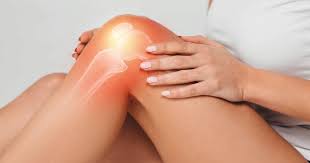
Knee Pain Treatment Melbourne is one of the most common searches when pain starts affecting walking, training, or even sitting.
Most people focus directly on the knee. They rest it, stretch it, or strengthen it, but the pain keeps coming back.
That is because the knee is often not the true starting point of the problem.
What Type of Problem Is This?
The knee sits between the hip and the ankle. It depends on both for how it moves and absorbs load.
If the hip is not controlling movement well, or the ankle is restricted, the knee starts taking more stress than it should, and over time this builds irritation, tension, and sensitivity around the joint.
Why Does This Keep Coming Back?
The problem is not just the knee. It is how force is moving through the entire leg.
You can strengthen the knee or rest it, but if the movement pattern stays the same, the stress does not change, and this is why the pain keeps returning during normal activity.
How Do We Approach Knee Pain?
Identify the driver:
The first step is understanding what is actually loading the knee. This is done through movement testing, joint assessment, and palpation, helping determine whether the issue is coming from the hip, ankle, or the knee itself.
Treat the source:
Once the main driver is clear, treatment becomes specific. Fascial Counterstrain is used to target the involved tissue by placing the body into a position of ease, allowing the irritated structures to settle and reducing the tension contributing to the pain, guided by what your body presents, not a standard routine.
Restore movement:
As the area becomes less reactive, movement can be reintroduced with better control and less stress on the knee, and the goal is not just pain relief, but improving how the entire chain works together.
What Makes This Case Different?
Not all knee pain is the same. Some cases are driven by poor hip control, others by ankle restriction, and others by local irritation within the knee itself, which is why a standard approach does not work.
What Can You Do?
- Avoid pushing through sharp or worsening pain
- Use controlled movement instead of complete rest
- Pay attention to how your hip and ankle move during activity
Conclusion
If your knee pain keeps returning, the issue may not be the knee itself, and it is often how load is being managed through the leg.
Book a session at Body Motion Therapy Melbourne to assess your movement and address the true source of your knee pain.
References
- Fritz K. Physiology, Counterstrain and Facilitated Positional Release. StatPearls Publishing, 2023
- Systematic reviews on lower limb biomechanics and knee pain (PubMed indexed literature)
Knee Pain Treatment Melbourne: Why Your Knee Pain Isn’t Just a Knee Problem
Intro
Knee Pain Treatment Melbourne searches often focus directly on the knee—but what if the knee isn’t the real problem? Many people feel pain at the front, inside, or back of the knee and assume something is damaged locally. Yet in clinical practice, knee pain is frequently a reaction to stress coming from somewhere else, such as the hip, foot, or even the lower back.
This is why short-term fixes often fail. You might rest, stretch, or strengthen the knee—but the pain keeps returning. To solve this properly, you need to understand what’s actually driving the load through the knee in the first place.
What Type of Problem Is This?
Most persistent knee pain falls under a load/biomechanical presentation. This means the knee is being asked to absorb forces it is not designed to handle alone.
The knee is a hinge joint. Its main role is to bend and straighten while transferring load between the hip and ankle. It does not control rotation or absorb sideways stress well. When surrounding structures stop doing their job, the knee compensates.
For example:
- A stiff ankle reduces shock absorption during walking or running
- A weak or poorly coordinated hip allows the thigh to collapse inward
- Tight or overloaded soft tissues change how force travels through the joint
The key mechanism is simple: the knee becomes overloaded because force is no longer distributed properly. Over time, this leads to irritation in structures like the patellar tendon, joint lining, or surrounding soft tissues.
Why Does This Keep Coming Back?
Recurrent knee pain is rarely random. It persists because the source of the load hasn’t changed.
If the hip is not controlling rotation, every step places extra stress through the knee. If the foot collapses inward, the knee must compensate with every stride. These patterns are automatic and repeat thousands of times per day.
What makes this tricky is that the body adapts. The knee stiffens, surrounding muscles tighten, and movement becomes guarded. This may temporarily reduce discomfort, but it also locks the problem in place by reinforcing the same faulty loading pattern.
Underline this clearly: you are not just dealing with a sore knee—you are dealing with a system that has adapted around it.
How Do We Approach Knee Pain Treatment Melbourne?
Identify the driver:
We don’t start with the knee—we start with how you move. Assessment includes walking patterns, squat mechanics, single-leg control, and how your hip and ankle behave under load. Palpation and positional testing help locate areas of abnormal tension or sensitivity.
The goal is to find where control or mobility has broken down, not just where the pain is felt.
Treat the source:
Once the driver is identified, treatment is directed at that exact area using Fascial Counterstrain. This is a gentle, highly specific method where the body is placed into positions of ease to reduce protective tension and sensitivity in the tissues.
As outlined in clinical descriptions of the technique, this approach works by calming abnormal neuromuscular activity and reducing guarding in soft tissues, allowing the system to reset without force .
This matters because you cannot force a system out of protection—you have to guide it out of it.
Restore movement:
As the source settles, movement changes naturally. The knee no longer absorbs excessive load, and patterns begin to normalise.
You may notice:
- Easier squatting or stairs
- Reduced stiffness after sitting
- More stable single-leg balance
The improvement is not just pain relief—it is a redistribution of load across the body.
What Makes This Case Different?
Not all knee pain is the same. One person may have a hip-driven issue, another an ankle restriction, and another a local overload from sudden training changes.
This is why generic strengthening or stretching programs often fail. They are not wrong—but they are incomplete.
Effective Knee Pain Treatment Melbourne must match the driver, not just the symptom. Two people with identical knee pain can require completely different treatment approaches based on what is actually causing the overload.
What Can You Do?
- Avoid pushing through sharp or worsening knee pain
- Pay attention to movements that trigger symptoms (stairs, squats, running)
- Reduce sudden spikes in training or activity load
- Seek assessment early if pain keeps returning
Conclusion
Knee pain rarely exists in isolation. When the knee is overloaded, it is usually compensating for something else. Treating the knee alone may give short-term relief, but lasting results come from identifying and addressing the true source of stress.
If your knee pain keeps coming back, it’s time to look deeper. A targeted, assessment-driven approach can help you move better, reduce strain, and return to activity with confidence.
References
- Fritz K. Physiology, Counterstrain and Facilitated Positional Release. StatPearls Publishing, 2023.
- Powers CM. The influence of abnormal hip mechanics on knee injury. Journal of Orthopaedic & Sports Physical Therapy, 2010.
- Willy RW, Davis IS. The effect of a hip-strengthening program on mechanics during running. Journal of Orthopaedic & Sports Physical Therapy, 2011.
- Neal BS et al. Foot posture as a risk factor for lower limb overuse injury. Journal of Foot and Ankle Research, 2014.